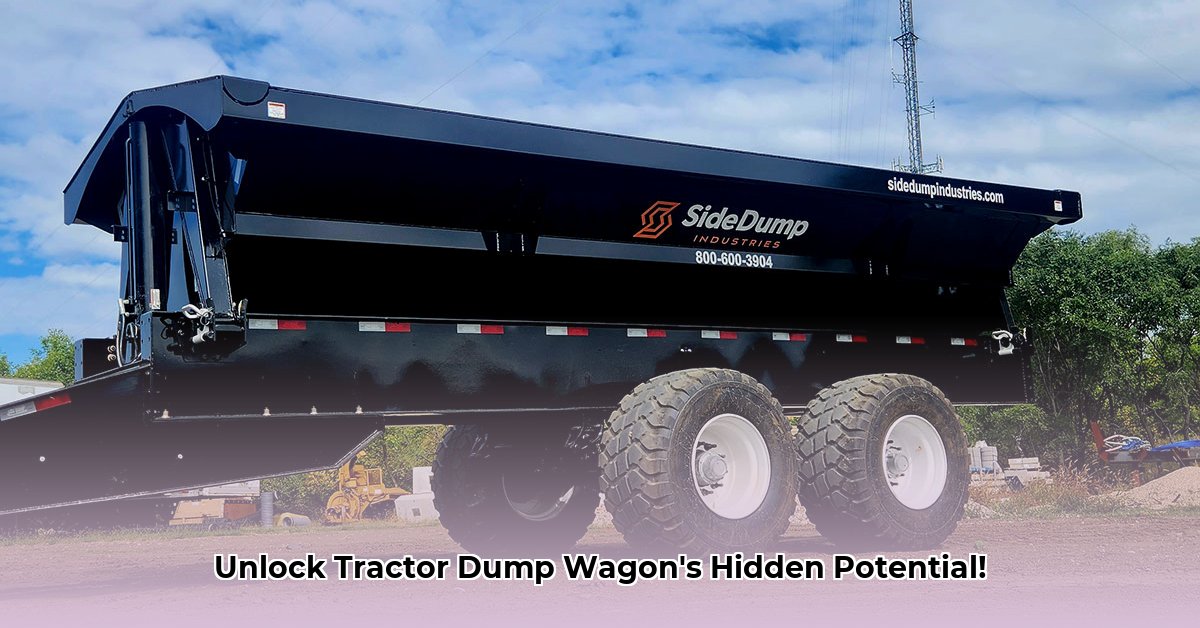
Choosing the right tractor dump wagon can dramatically improve your farm's efficiency and lessen its environmental impact. This guide provides actionable steps for selecting, using, and maintaining these versatile pieces of equipment for sustainable farming practices. For more information on choosing the right wagon, check out this helpful resource: Wagon Selection Guide.
Understanding Tractor Dump Wagon Options
Tractor dump wagons come in various sizes and configurations. Capacity is crucial; consider the volume of materials you regularly transport—manure, harvested crops, soil amendments, etc. Larger wagons mean fewer trips, saving you time and fuel, but they might be less suitable for smaller farms or uneven terrain. A larger wagon is a significant investment. Does your budget support a larger, more efficient option, or are you better served by a more modest investment?
Beyond capacity, consider essential features. Self-unloading mechanisms significantly reduce labor. Tarp covers prevent spillage, protecting both valuable resources and the environment. Durable construction materials ensure a longer lifespan, minimizing replacement costs. Think about the materials—steel is robust but heavy; lighter materials might be suited to specific terrains. Choosing the right wagon is about selecting the perfect tool for your farm's unique needs. Consider a self-unloading wagon to save time and increase efficiency. What are the long-term implications of your choice?
Sustainable Applications: Boosting Your Farm's Green Credentials
Tractor dump wagons directly support sustainable farming practices:
Efficient Manure Management: Efficiently moving manure from barns to fields minimizes odors and environmental contamination. Applied correctly, manure acts as a natural fertilizer, reducing reliance on synthetic alternatives – a significant cost and environmental savings. How much could you reduce your fertilizer costs by using manure more efficiently?
Reduced Soil Erosion: Careful transport of harvested crops minimizes soil disturbance, preventing erosion and preserving valuable topsoil. This is especially important on sloped fields, where erosion can be a substantial problem. What strategies can you implement to minimize erosion on your farm?
Improved Transportation Logistics: Fewer trips translate to reduced fuel consumption and a smaller carbon footprint. This contributes directly to your farm's overall sustainability goals. By how much can you reduce your farm's carbon footprint by optimizing transportation?
Expert Insight: "Efficient manure management is critical for sustainable agriculture," states Dr. Emily Carter, Professor of Agricultural Engineering at the University of California, Davis. "Tractor dump wagons offer a real solution for reducing fertilizer use and minimizing nutrient runoff, leading to significant environmental benefits."
Selecting the Right Wagon: A Decision-Making Framework
This checklist will guide you through the selection process:
Capacity: Estimate your largest anticipated load. Overestimating is better than underestimating; you don't want to be constantly making trips.
Terrain: Assess field conditions. Hilliness and uneven terrain may require a wagon with increased ground clearance and robust suspension.
Budget: Establish a realistic budget, including purchase price, maintenance, repairs, and fuel costs. Consider the long-term cost of ownership.
Key Features: Self-unloading features, tarp systems, and durable construction significantly impact value and longevity. Think about your long-term needs and choose wisely.
Tractor Compatibility: Ensure the wagon's hitch and hydraulic system are compatible with your tractor. Verify weight limits to avoid overloading.
Choosing a wagon is a significant investment; thorough consideration will pay off.
Maintenance and Operation for Optimal Performance
Regular inspections are paramount. Check hydraulic lines, tires, and the overall structure before each use. Addressing small issues prevents them from becoming costly repairs.
Safe operating practices are crucial. Always ensure the hitch is securely connected and adhere to the manufacturer's safety guidelines. Proper operator training is non-negotiable.
Consider the environmental aspects. Handle spills responsibly, cleaning up leaks or loose materials immediately.
Actionable Steps:
- Regular Inspections (Monthly): Check for wear and tear, leaks, and loose connections.
- Tire Pressure Check (Before Each Use): Maintain optimal inflation for fuel efficiency and soil health.
- Scheduled Maintenance (Annually): Thorough inspection and servicing by a qualified mechanic.
Proper maintenance ensures longevity and minimizes environmental impact.
Conclusion: Investing in a Sustainable Future
Tractor dump wagons are more than just tools; they're key pieces of equipment for efficient and sustainable farming. By carefully selecting and maintaining your wagon, you'll save time and money, reduce your environmental impact, and build a more sustainable and profitable farm. Research local suppliers, explore government subsidies, and make informed decisions to optimize your farm’s efficiency and environmental sustainability.